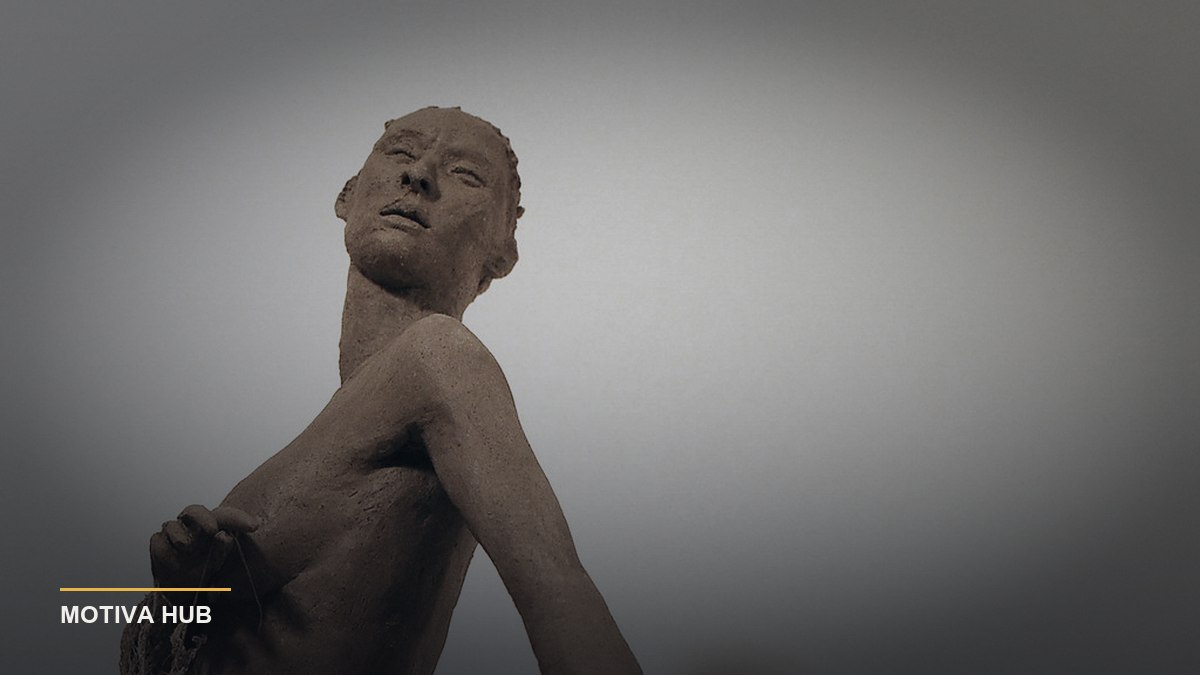

Growth is not a staircase but a mountain. The plateaus are not failures — they are the ground reorganising itself beneath you.
The Map You Were Given Is Wrong
Every motivational poster shows the same picture: a line climbing steadily upward, one step at a time, from the bottom to the top. It is a beautiful lie.
The true picture is a mountain path: long flat stretches, sudden drops, switchbacks that seem to go backward, and — only rarely — a clear upward step you can feel. The people who quit are not the weak ones. They are the ones who believed the poster and could not find it on the real trail.
The Plateau Is Not a Failure
Here is the truth the poster never tells you: most of growth is invisible. The muscle is built during the weeks the scale does not move. The understanding is formed during the months the page stays blank. The mountain is climbed during the years no one is watching.
The Stoics had a word for this — progress, the slow daily advance that cannot be measured by the week. They knew that the plateau is the ground reorganising itself beneath you. The roots are growing during the quiet years. The visible fruit is just the overdue account of invisible work.
The Three False Gods of Progress
We measure growth by the wrong instruments:
1. The Calendar
You expect results by a date. But growth is not scheduled — it is harvested. The calendar measures time, not transformation.
2. The Comparison
You compare your mountain to someone else’s summit. But you are not climbing their mountain. You are climbing yours, with your weight, your weather, your path.
3. The Feeling
You expect to feel like you are growing. But growth mostly feels like confusion, boredom, and doubt — the honest companions of the climb.
The Climb Is the Curriculum
The Stoics believed that the ascent itself teaches everything. Every switchback is a lesson in patience. Every plateau is a lesson in trust. Every false summit is a lesson in humility — the mountain saying: not yet, friend.
This is why the “quick win” is dangerous. The quick win teaches you nothing except that quick wins are possible, which is mostly a lie. The long ascent teaches you everything: that you can continue, that you can endure, that you are the kind of person who finishes the mountain.
How to Keep Climbing
1. Measure the Year, Not the Week
The weekly measurement will crush you. The yearly measurement will amaze you. Keep a journal with a yearly review — and let the daily entries be about showing up, not progressing.
2. Collect Evidence, Not Feelings
Keep the artefacts: the first page you wrote, the first picture you drew, the first time you ran ten minutes. When the plateau doubts you, the artefacts testify. The evidence does not lie, even when the feelings do.
3. Reframe the Switchbacks
When the path turns downward, it is not retreat. It is the mountain’s way of giving you softer ground, a different view, or a steeper approach from a better angle. Seneca wrote: “Every new beginning comes from some other beginning’s end.” The drop is a turn, not a fall.
4. Carry Less
The long ascent is made lighter by dropping what you do not need: the grudges, the comparisons, the old failures. The Stoic climbs light — he has already decided what he will not carry.
The View From the False Summit
Every climber has stood on a false summit and seen the true one — still far, still high, suddenly real. Most people stop there, because the false summit is where the view is good and the work is done.
The few continue. Not because the remaining climb is easy, but because they have learned the one thing the mountain teaches: the summit was never the point. The climb was the point. The person the climb makes of you is the point.
Keep Going
If you are on a plateau right now — if nothing moves, nothing changes, nothing rewards you — you are not failing. You are in the quiet stretch where roots grow.
Do not measure the week. Do not compare the path. Do not wait for the feeling. Climb today, and let today be enough. The summit keeps its own appointment — and you are closer than the view suggests.